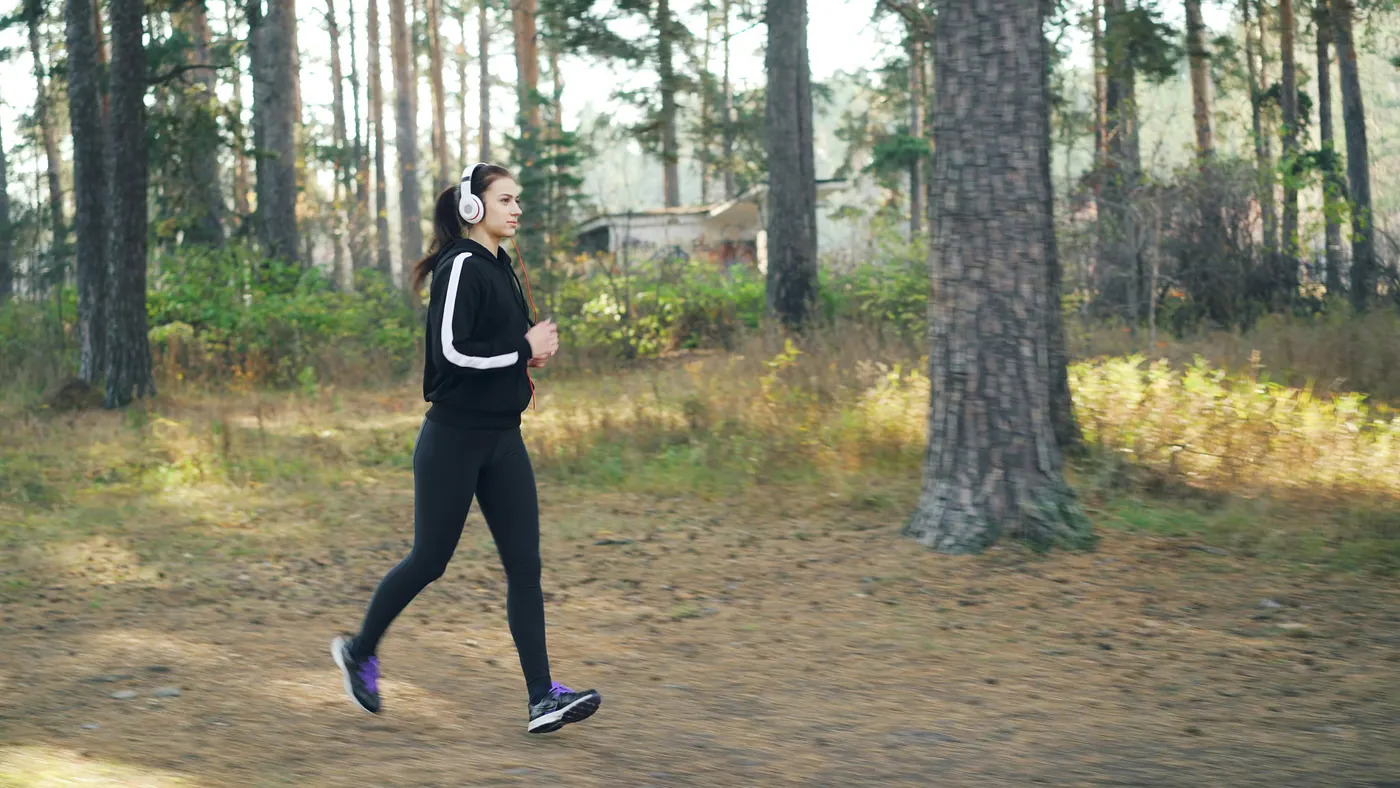
How I Learned To Brisk-Walk Correctly And Why It’s Still My Favorite Cardio
It’s all about posture, technique, and the surprising benefits that follow
“Solvitur ambulando.” (It is solved by walking.) — Saint Augustine
I was in fifth or sixth grade when my dad started going on evening walks, and I would gladly tag along. Anything to postpone homework, right?
On day one, we did a quick five-minute full-body warm-up, something I later realized is non-negotiable. Then, we started our brisk walk.
Barely two rounds in, my dad turned to me and said, “Putta” (a term of endearment in Kannada), “you’re walking all wrong.”
I remember staring at him blankly. He smiled and said, “Let’s start with your posture first.”
Step 1: Get your posture right

He asked me to stand normally, then started to fix my posture.
Stand easy. Don’t slouch. Don’t stiffen. Keep your shoulders and neck relaxed, no puffed-up chest.
Keep your chin parallel to the ground; don’t stare at your feet. Look a few steps ahead.
Engage your core and do not suck or hold your stomach in. Align your head, stomach, and hips in one straight line. It should not be a loose rope.
When I finally got it right, he nodded and said, “Good. Now let’s walk.”
Step 2: Walk at your natural pace

Most people think brisk walking means “move as fast as you can.” Nope. It’s about finding your own pace and controlling it— not army marching like you’re in a parade.
Here’s the sequence my dad drilled into me:
Heel + Midfoot → Toes → Repeat.
Start by landing gently on your heel or midfoot, not with a heavy heel strike, and roll your weight smoothly forward through the midfoot to the toes.
Initially, I used to thrust too hard with my heel.
My legs and hips ached later, because the force from the floor shot upward through my legs — what’s technically called the ground reaction force. A rookie mistake!
Once I shifted to a softer heel-to-midfoot roll, everything changed. No more joint and hip pain. No more knee locks. You can also apply it to your daily normal walk, too.
And your arms, keep them bent at 90°, close to your body, swinging gently from your shoulders. Also, avoid longer steps. They don’t mean faster calorie burn; they stress your knees. Your short and lighter steps build pace and strength.
Step 3: Warm-up and cool-down matter

Skipping a warm-up or cool-down is like stepping onto a dance floor without hearing the music first.
Body muscles and joints need to be signaled about the change of pace, because any sudden movement without preparation can shock your system. It tightens muscles, raises the heart rate too quickly, and increases the risk of injury.
A short warm-up wakes up your circulation and lubricates the joints, while a cool-down helps your heart rate and muscles ease back to baseline.
My brisk-walk ritual today looks like this:
- 5–10 minutes full-body warm-up: neck rolls, shoulder circles, hip and ankle rotations, side bends — wakes up the joints.
- Phone in my pocket, hands free.
- First round: Slow walk, focus on form.
- Next two rounds: Brisk pace — strong, steady, and the heel-to-toe rhythm.
- Cycle: So, two rounds brisk, one slow. Repeat for 30 minutes. And if I’m short on time, I do two 10-minute sessions — one in the morning, one in the evening.
- Final round: Slow walk to bring the heart rate down.
When I’m done, I sit on a park bench for a few minutes, feel the sun on my face, hear the birds, and imagine Dad beside me, sharing the bench.
“A walk in nature walks the soul back home.” — Mary Davis
Why Brisk Walking Is Amazing

Walking is man’s best medicine.” — Hippocrates
More than any other cardio workout, I love this one because of its simplicity and accessibility. No gym. No equipment. Just a decent pair of shoes. And anyone at any fitness level can easily start. (No more excuses, teehee)
And for me, I love walking in the outdoors, to be one with nature. You can do it anywhere — on a terrace, a treadmill, or a park lane.
Here’s what just 10 minutes of brisk walking does for you:
- It instantly makes you feel good. It improves your mood and reduces anxiety and depression.
- It increases blood flow to the brain, which means sharper focus and better decisions.
- It helps your heart get stronger by building strong heart muscles due to the raised heart rate.
- Improves smooth blood flow by making blood vessels more flexible.
- Lowers post-meal blood sugar spikes by up to 30%.
Awesome! Right?
My Final Thoughts

“Walking is the best possible exercise. Habituate yourself to walk very far.” — Thomas Jefferson
So, the next time you step out, don’t just stroll. Walk consciously.
Feel your feet land. Notice your breath. Adjust your shoulders. Find your rhythm — and own your walk!
P.S.: If you are a visual learner like me, then here is a video to help.
Grateful you made it to the end. I deeply appreciate your time. If my words resonated and left you better than they found you, I’d love to hear from you. Your thoughts and reflections are always welcome.
Stay kind. Stay real.