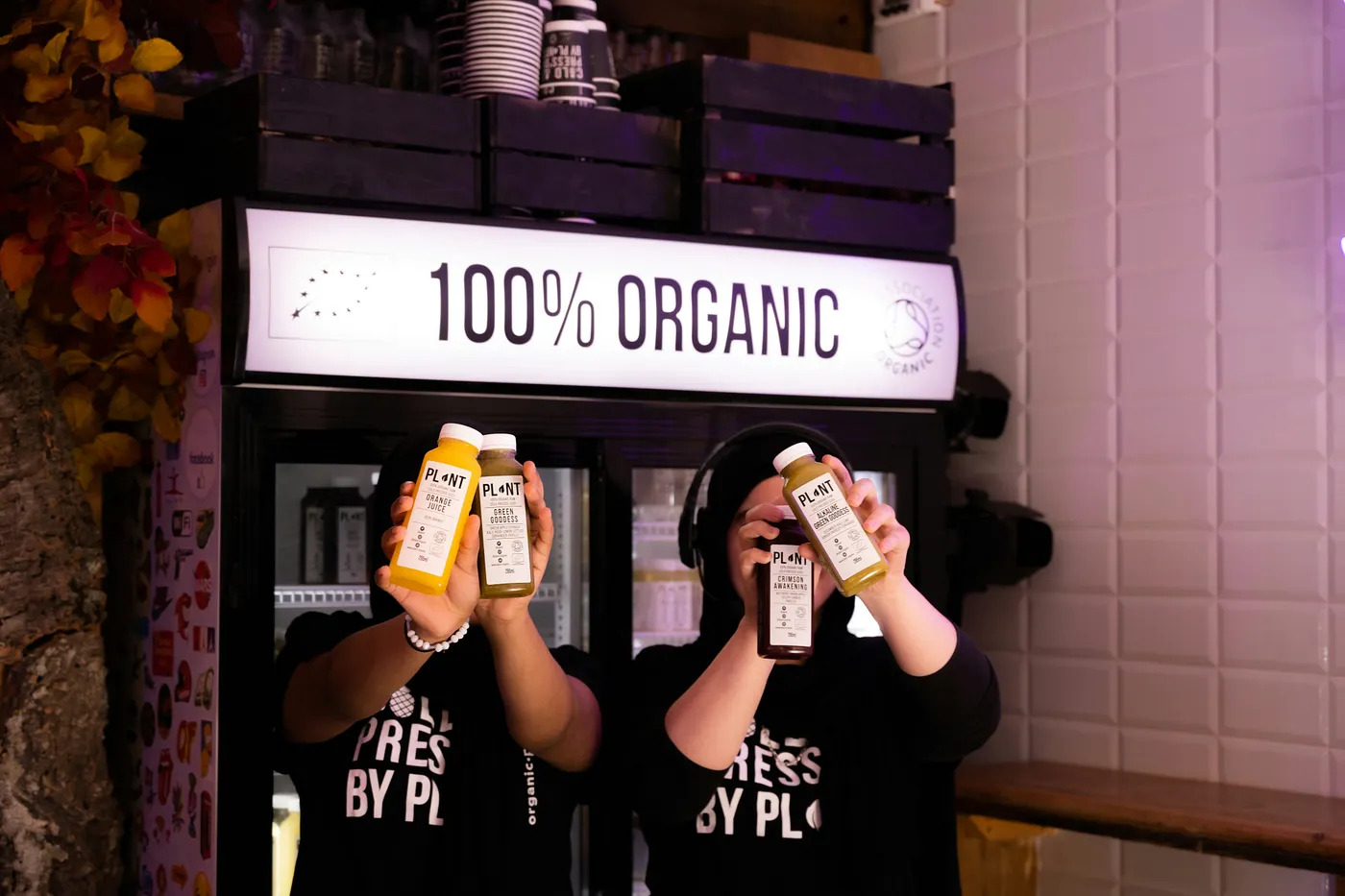
That “Certified Organic” Label Is Not Telling You the Full Story
Eco and sustainability certifications aren’t the same thing, and that confusion is costing you on your shopping and, even worse, your medical bills
Most people shopping for sustainable products think they’re buying safe products. And not just for themselves, but also for our planet.
Honestly, it made me feel good knowing that I belonged to this wholesome squad, too.
Until my green bubble burst when I found that these organic brands lie. And that they benefit from our unawareness. I started seeing red flags in all shades.
A few years ago, I’d ordered from a popular brand that claimed to be “natural”. I bought their amla (Indian gooseberry)hair oil, which contained Light Liquid Paraffin. And their amla shampoo had added colors and a short, unclear ingredient list. I wasn’t aware of any of this at the time. But after using them just twice, I noticed my hair fall was getting worse.
That’s when I realized that these brands were playing me, with my trust and my money. They had me fooled with their wannabe “eco-friendly” and “certified organic” labels.
What I also didn’t know back then was this —
Sustainable certifications and eco certifications are not the same thing.
But now I’ve got a decent hang of their game. And can call their bluff early on. So let me tell you how I shop from clean and conscious brands.
Why These Certifications Exist in the First Place

Certifications exist because sustainable is not a protected word.
Any brand can print it on packaging without meeting a single measurable standard. No law stops them.
Once brands figured this out, things got messy real fast. The market was immediately flooded with products confidently claiming their fake and hollow green labels.
This is where third-party certification bodies came in. They are an external organization that validates that a product, organization, and its every process meet specified standards set by them.
They brought order to the chaos with their audit brands. Set measurable criteria. And issued certification only if the brand checked all their green boxes. Real saviors.
Here’s the distinction everyone should know.
Eco certifications focus on one thing only: environmental impact. That includes biodegradable packaging. Recyclable materials. Reduced carbon footprint. Important, yes. But specific and narrow.
Now, sustainable certification includes not just the environmental factors but also social, ethical, and economic factors. This is the entire certification umbrella. And eco certification is just one part that falls under this umbrella.
Eco is the movie trailer. Sustainability is the whole three-hour movie.
Sustainability Certifications That You Can Actually Trust

Notice something? Each certification solves one piece of the puzzle, not the whole picture.
Like, USDA Organic tells you how a crop was grown. It tells you nothing about what happened in the factory afterward. About the solvents used in processing, the chemicals added for shelf life, and the conditions of the workers on the floor. One certification is never the full story.
So knowing what each certification measures and what it doesn’t is the whole game.
The Certifications That Are Designed to Confuse You

This is another deliberate trick.
Brands figured out that consumers trust certifications.
So, they write labels that sound like certifications: “100% Natural.” “Toxin Free.” “Eco Friendly.” These are labels and market claims, not certifications. There is no third-party body behind them. Mostly, the brand’s internal marketing team wrote them. That’s it.
Then they use visual cues like a green circle. A leaf icon. The word “Certified” in an official-looking font.
Your brain takes the bait and registers it as verified. But it’s not.
The single question that cut through the bait for me was “Certified by whom?” If the answer didn’t give me a named, independent, third-party organization, I knew it was not a certification.
Here are some labels that even informed shoppers get wrong:
“Certified Natural”

There is no universal standard for this phrase.
It is not legally protected. Any brand can create its own in-house “natural” certification and print it on a label tomorrow.
A product can be 1% natural and 99% synthetic and still carry this claim without violating a single rule.
Rainforest Alliance

The main focus here is to improve farming practices. And it does.
What it doesn’t monitor are other ingredients used along with the agricultural product. It cares only about where the agricultural material is sourced. Whether the biodiversity, soil, or water resources were harmed or not by farmers.
For example, a box of tea can carry Rainforest Alliance certification for its tea leaves, while the added flavoring and sweeteners are entirely unmonitored.
But the brand will still market the whole product as sustainable just because of this one certification. So wrong.
Carbon Neutral Certified

This one measures climate impact only.
Many carbon-neutral claims are built on purchased carbon offsets, not actual emission reductions.
For example, a company may discharge one bucket of chemically polluted water into a lake. And then promise to restore an equivalent amount of water elsewhere after a few months. Sure. Totally trustable.
This may appear fair, but what about the immediate environmental damage caused at the original site? It also raises concerns about accountability. Who monitors if the company truly restored as promised?
The damage is still real. The certificate just states the theoretical compensation.
“Made with Organic Ingredients”

Perhaps the most misleading phrase in this entire space.
Regulations in many markets allow a product to carry this claim when as little as 5–10% of its ingredients are certified organic. The remaining 90% can be synthetic, conventional, or sourced without any ethical standard whatsoever.
Sadly, even luxury brands charging premium prices do this.
Some Brands Do Not Need Certifications

Yes. Because certifications are not the only way to measure a brand’s integrity.
Certifications cost money. For small brands and independent producers in lower-income countries, the audit fees, documentation requirements, and renewal costs can be prohibitive.
I’ve come across small textile producers, like Khamir (Kutch, Gujarat), Dastkar (Pan-India Artisan Network), doing genuinely ethical work. Some even pay above market wages, using natural dyes, maintaining traditional craft practices, but they simply cannot afford GOTS certification.
Their product is more sustainable in practice than many certified competitors. The certification just isn’t accessible to them.
So, what to look for here is their supplier list. The ingredients and processes they use. How much fair wage do they pay? Nobody can be 100% sustainable; it is a process to reduce as many toxins as possible and keep the planet safe, too.
Do Your Job Right

We shouldn’t need any of this in the first place, don’t you think?
Do you see what we’ve actually built here… an entire parallel industry of certifications, audits, third-party verifiers, consumer education platforms, and label-decoding guides.
All this because companies decided not to make completely safe products?
And we, as consumers, just want value for our money and intentions.
Our lives are already hard enough. We slog hard. Many of us don’t even enjoy the jobs we do. Some of us live in unsafe homes. Most of us carry financial stress that is enough for five lives.
Despite it all, we are still standing here, fighting and figuring things out on our own. No mentorship. So that at the end of the day, when our head hits the pillow, we get to feel a small sense of accomplishment.
And when we walk into a store and pay a premium price for a product that claims to be natural, it better deliver. That’s just groundwork. Well, also accountability.
Economists have a polite word for what happens when companies skip that part: externalities.
These companies have recently cost U.S. people almost 3$ trillion annually in healthcare and environmental damage. All of this shows up in consumers’ medical bills, which, of course, are not taken care of by the company.
India doesn’t even have a consolidated number yet. Seriously?
What we do have are billions lost to disease, pollution costing over 8% of GDP, and rising health conditions linked to chemical exposure. The damage exists. We just haven’t measured it
I want to be clear, I am not against profit. What I am against is their specific, deliberate business model that ignores ethics.
Most of us consumers today are doing more than just paying for the product.
We are reading labels. We are researching. We are taking time to understand big chemical words like “Phenoxyethanol”. And when the product still harms us, somehow it is our responsibility?
This is where my rage tipped off.
Enough is enough. Because the responsibility for making safe products belongs to the “business class” folks churning these products.
And certifications, for all their limitations and loopholes, are at least an attempt to enforce brands to hold a standard they should have chosen voluntarily.
So here’s where I’ve landed.
I am no longer impressed by a brand’s popularity or its owner’s wealth. Not by their year-on-year profits, their customer base, or their market cap. And definitely not by the white lies in their big fat sustainability report.
My money and trust are in brands that take accountability. Whose brand value is maintaining transparency. Backing brands that could easily hide behind a certification and choose not to.
The world might be obsessed with financial wealth. But to me, ethical wealth is the rarest. And that’s the only kind I respect.
Grateful you made it to the end. If my words resonated and left you better than they found you, I’d love to hear from you.
Stay kind. Stay real.